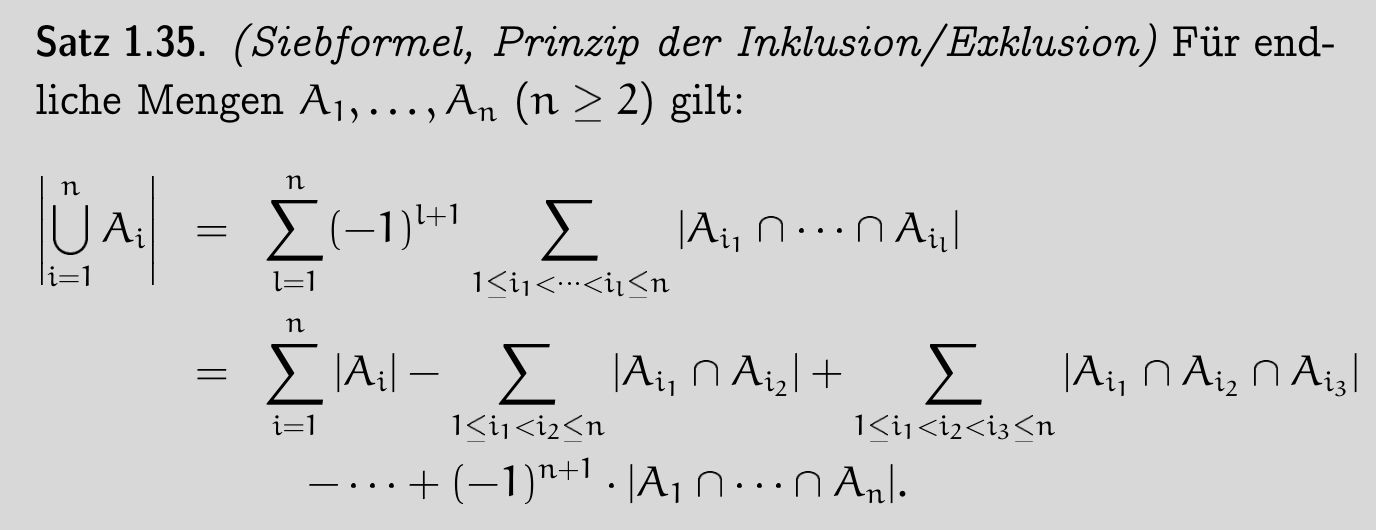
Note 1: ETH::2. Semester::A&W
Deck: ETH::2. Semester::A&W
Note Type: Horvath Occlusio
GUID:
modified
Note Type: Horvath Occlusio
GUID:
e}`+YBit[=
Before
Front
Back
After
Front
Back
Field-by-field Comparison
| Field | Before | After |
|---|---|---|
| Occlusion | {{c1::image-occlusion:rect:left=.18 |
{{c1::image-occlusion:rect:left=.186:top=.2984:width=.5344:height=.2754}}<br>{{c2::image-occlusion:rect:left=.183:top=.5891:width=.8119:height=.3672}}<br> |
Note 2: ETH::2. Semester::Analysis
Deck: ETH::2. Semester::Analysis
Note Type: Horvath Cloze
GUID:
modified
Note Type: Horvath Cloze
GUID:
BSr]>]k62I
Before
Front
Um zu beweisen, dass eine komplexe Zahl \(z\) reel ist benutzen wir: {{c1:: \(z = \overline{z}\) iff \(z \in \mathbb{R}\) }}.
Back
Um zu beweisen, dass eine komplexe Zahl \(z\) reel ist benutzen wir: {{c1:: \(z = \overline{z}\) iff \(z \in \mathbb{R}\) }}.
After
Front
Um zu beweisen, dass eine komplexe Zahl \(z\) reel ist, benutzen wir:
{{c1:: \(z = \overline{z}\) iff \(z \in \mathbb{R}\) }}.
{{c1:: \(z = \overline{z}\) iff \(z \in \mathbb{R}\) }}.
Back
Um zu beweisen, dass eine komplexe Zahl \(z\) reel ist, benutzen wir:
{{c1:: \(z = \overline{z}\) iff \(z \in \mathbb{R}\) }}.
{{c1:: \(z = \overline{z}\) iff \(z \in \mathbb{R}\) }}.
Field-by-field Comparison
| Field | Before | After |
|---|---|---|
| Text | Um zu beweisen, dass eine komplexe Zahl \(z\) reel ist benutzen wir: {{c1:: \(z = \overline{z}\) iff \(z \in \mathbb{R}\) }}. | Um zu beweisen, dass eine komplexe Zahl \(z\) reel ist, benutzen wir: <br>{{c1:: \(z = \overline{z}\) iff \(z \in \mathbb{R}\) }}. |
Note 3: ETH::2. Semester::Analysis
Deck: ETH::2. Semester::Analysis
Note Type: Horvath Cloze
GUID:
modified
Note Type: Horvath Cloze
GUID:
GpeYs?]Pys
Before
Front
Wichtige Grenzwerte:
i) \(\lim_{n\to\infty} \frac{\log n}{n} =\) \(0\) = \(\lim_{n\to\infty} \frac{\ln n}{n}\)
ii) \(\lim_{n\to\infty} n^{1/n} =\) \(1\)
iii) \(\lim_{n\to\infty} x^{1/n} =\) \(1\), \(\quad x > 0\)
iv) \(\forall x \in \mathbb{R}: \lim_{n\to\infty} \left(1 + \frac{x}{n}\right)^n =\) \(e^x\)
v) \(\forall x \in \mathbb{R}: \lim_{n\to\infty} \frac{x^n}{n!} =\) \(0\)
i) \(\lim_{n\to\infty} \frac{\log n}{n} =\) \(0\) = \(\lim_{n\to\infty} \frac{\ln n}{n}\)
ii) \(\lim_{n\to\infty} n^{1/n} =\) \(1\)
iii) \(\lim_{n\to\infty} x^{1/n} =\) \(1\), \(\quad x > 0\)
iv) \(\forall x \in \mathbb{R}: \lim_{n\to\infty} \left(1 + \frac{x}{n}\right)^n =\) \(e^x\)
v) \(\forall x \in \mathbb{R}: \lim_{n\to\infty} \frac{x^n}{n!} =\) \(0\)
Back
Wichtige Grenzwerte:
i) \(\lim_{n\to\infty} \frac{\log n}{n} =\) \(0\) = \(\lim_{n\to\infty} \frac{\ln n}{n}\)
ii) \(\lim_{n\to\infty} n^{1/n} =\) \(1\)
iii) \(\lim_{n\to\infty} x^{1/n} =\) \(1\), \(\quad x > 0\)
iv) \(\forall x \in \mathbb{R}: \lim_{n\to\infty} \left(1 + \frac{x}{n}\right)^n =\) \(e^x\)
v) \(\forall x \in \mathbb{R}: \lim_{n\to\infty} \frac{x^n}{n!} =\) \(0\)
i) \(\lim_{n\to\infty} \frac{\log n}{n} =\) \(0\) = \(\lim_{n\to\infty} \frac{\ln n}{n}\)
ii) \(\lim_{n\to\infty} n^{1/n} =\) \(1\)
iii) \(\lim_{n\to\infty} x^{1/n} =\) \(1\), \(\quad x > 0\)
iv) \(\forall x \in \mathbb{R}: \lim_{n\to\infty} \left(1 + \frac{x}{n}\right)^n =\) \(e^x\)
v) \(\forall x \in \mathbb{R}: \lim_{n\to\infty} \frac{x^n}{n!} =\) \(0\)
After
Front
\(\lim_{n\to\infty} \frac{\log n}{n} =0=\lim_{n\to\infty} \frac{\ln n}{n}\)
Back
\(\lim_{n\to\infty} \frac{\log n}{n} =0=\lim_{n\to\infty} \frac{\ln n}{n}\)
Field-by-field Comparison
| Field | Before | After |
|---|---|---|
| Text | \(\lim_{n\to\infty} \frac{\log n}{n} ={{c1::0}}=\lim_{n\to\infty} \frac{\ln n}{n}\) |
Note 4: ETH::2. Semester::Analysis
Deck: ETH::2. Semester::Analysis
Note Type: Horvath Cloze
GUID:
added
Note Type: Horvath Cloze
GUID:
J^^9@5@lPF
Previous
Note did not exist
New Note
Front
\(\forall x \in \mathbb{R}: \lim_{n\to\infty} \left(1 + \frac{x}{n}\right)^n =e^x\)
Back
\(\forall x \in \mathbb{R}: \lim_{n\to\infty} \left(1 + \frac{x}{n}\right)^n =e^x\)
Field-by-field Comparison
| Field | Before | After |
|---|---|---|
| Text | \(\forall x \in \mathbb{R}: \lim_{n\to\infty} \left(1 + \frac{x}{n}\right)^n ={{c1::e^x}}\) |
Note 5: ETH::2. Semester::Analysis
Deck: ETH::2. Semester::Analysis
Note Type: Horvath Cloze
GUID:
added
Note Type: Horvath Cloze
GUID:
NEBKQjU,}U
Previous
Note did not exist
New Note
Front
\(\forall x \in \mathbb{R}: \lim_{n\to\infty} \frac{x^n}{n!} =0\)
Back
\(\forall x \in \mathbb{R}: \lim_{n\to\infty} \frac{x^n}{n!} =0\)
Field-by-field Comparison
| Field | Before | After |
|---|---|---|
| Text | \(\forall x \in \mathbb{R}: \lim_{n\to\infty} \frac{x^n}{n!} ={{c1::0}}\) |
Note 6: ETH::2. Semester::Analysis
Deck: ETH::2. Semester::Analysis
Note Type: Horvath Cloze
GUID:
added
Note Type: Horvath Cloze
GUID:
N^QY]r4!aj
Previous
Note did not exist
New Note
Front
\(\lim_{n\to\infty} n^{1/n} =1\)
Back
\(\lim_{n\to\infty} n^{1/n} =1\)
Field-by-field Comparison
| Field | Before | After |
|---|---|---|
| Text | \(\lim_{n\to\infty} n^{1/n} ={{c1::1}}\) |
Note 7: ETH::2. Semester::Analysis
Deck: ETH::2. Semester::Analysis
Note Type: Horvath Cloze
GUID:
modified
Note Type: Horvath Cloze
GUID:
N_FBS|)<_`
Before
Front
Rechenregeln für Grenzwerte (mit \(\lim_{n\to\infty} a_n = K\) und \(\lim_{n\to\infty} b_n = L\)):
i) \(\lim_{n\to\infty}(a_n + b_n) = \)\(K + L\)
ii) \(\lim_{n\to\infty}(a_n - b_n) =\)\(K - L\)
iii) \(\lim_{n\to\infty}(a_n \cdot b_n) =\) \(K \cdot L\)
iv) \(\lim_{n\to\infty}(C \cdot a_n) =\) \(C \cdot K\)
v) Falls \(L \neq 0\) und \(b_n \neq 0\): \(\lim_{n\to\infty}(a_n / b_n) =\) \(K / L\)
vi) Falls \(K < L\), gibt es ein \(N \in \mathbb{N}\), so dass \(a_n < b_n\) für alle \(n \geq N\).
vii) Falls \(a_n \leq b_n\) für alle \(n \geq N\), gilt auch \(K \leq L\).
i) \(\lim_{n\to\infty}(a_n + b_n) = \)\(K + L\)
ii) \(\lim_{n\to\infty}(a_n - b_n) =\)\(K - L\)
iii) \(\lim_{n\to\infty}(a_n \cdot b_n) =\) \(K \cdot L\)
iv) \(\lim_{n\to\infty}(C \cdot a_n) =\) \(C \cdot K\)
v) Falls \(L \neq 0\) und \(b_n \neq 0\): \(\lim_{n\to\infty}(a_n / b_n) =\) \(K / L\)
vi) Falls \(K < L\), gibt es ein \(N \in \mathbb{N}\), so dass \(a_n < b_n\) für alle \(n \geq N\).
vii) Falls \(a_n \leq b_n\) für alle \(n \geq N\), gilt auch \(K \leq L\).
Back
Rechenregeln für Grenzwerte (mit \(\lim_{n\to\infty} a_n = K\) und \(\lim_{n\to\infty} b_n = L\)):
i) \(\lim_{n\to\infty}(a_n + b_n) = \)\(K + L\)
ii) \(\lim_{n\to\infty}(a_n - b_n) =\)\(K - L\)
iii) \(\lim_{n\to\infty}(a_n \cdot b_n) =\) \(K \cdot L\)
iv) \(\lim_{n\to\infty}(C \cdot a_n) =\) \(C \cdot K\)
v) Falls \(L \neq 0\) und \(b_n \neq 0\): \(\lim_{n\to\infty}(a_n / b_n) =\) \(K / L\)
vi) Falls \(K < L\), gibt es ein \(N \in \mathbb{N}\), so dass \(a_n < b_n\) für alle \(n \geq N\).
vii) Falls \(a_n \leq b_n\) für alle \(n \geq N\), gilt auch \(K \leq L\).
i) \(\lim_{n\to\infty}(a_n + b_n) = \)\(K + L\)
ii) \(\lim_{n\to\infty}(a_n - b_n) =\)\(K - L\)
iii) \(\lim_{n\to\infty}(a_n \cdot b_n) =\) \(K \cdot L\)
iv) \(\lim_{n\to\infty}(C \cdot a_n) =\) \(C \cdot K\)
v) Falls \(L \neq 0\) und \(b_n \neq 0\): \(\lim_{n\to\infty}(a_n / b_n) =\) \(K / L\)
vi) Falls \(K < L\), gibt es ein \(N \in \mathbb{N}\), so dass \(a_n < b_n\) für alle \(n \geq N\).
vii) Falls \(a_n \leq b_n\) für alle \(n \geq N\), gilt auch \(K \leq L\).
After
Front
Seien \(\lim_{n\to\infty} a_n = K,\lim_{n\to\infty} b_n = L\), dann gilt:
\(\lim_{n\to\infty}(a_n + b_n) = K+L\)
\(\lim_{n\to\infty}(a_n + b_n) = K+L\)
Back
Seien \(\lim_{n\to\infty} a_n = K,\lim_{n\to\infty} b_n = L\), dann gilt:
\(\lim_{n\to\infty}(a_n + b_n) = K+L\)
\(\lim_{n\to\infty}(a_n + b_n) = K+L\)
Field-by-field Comparison
| Field | Before | After |
|---|---|---|
| Text | Seien \(\lim_{n\to\infty} a_n = K,\lim_{n\to\infty} b_n = L\), dann gilt:<br><br>\(\lim_{n\to\infty}(a_n + b_n) = {{c1::K+L}}\) |
Note 8: ETH::2. Semester::Analysis
Deck: ETH::2. Semester::Analysis
Note Type: Horvath Cloze
GUID:
added
Note Type: Horvath Cloze
GUID:
gh5^:{G4i7
Previous
Note did not exist
New Note
Front
Seien \(\lim_{n\to\infty} a_n = K,\lim_{n\to\infty} b_n = L\), dann gilt:
\(\lim_{n\to\infty}(a_n \cdot b_n) =K\cdot L\)
\(\lim_{n\to\infty}(a_n \cdot b_n) =K\cdot L\)
Back
Seien \(\lim_{n\to\infty} a_n = K,\lim_{n\to\infty} b_n = L\), dann gilt:
\(\lim_{n\to\infty}(a_n \cdot b_n) =K\cdot L\)
\(\lim_{n\to\infty}(a_n \cdot b_n) =K\cdot L\)
Field-by-field Comparison
| Field | Before | After |
|---|---|---|
| Text | Seien \(\lim_{n\to\infty} a_n = K,\lim_{n\to\infty} b_n = L\), dann gilt:<br><br>\(\lim_{n\to\infty}(a_n \cdot b_n) ={{c8::K\cdot L}}\) |
Note 9: ETH::2. Semester::Analysis
Deck: ETH::2. Semester::Analysis
Note Type: Horvath Cloze
GUID:
modified
Note Type: Horvath Cloze
GUID:
h2X|4ZC)bO
Before
Front
Jede konvergente Folge hat genau einen Häufungspunkt, der mit dem Grenzwert übereinstimmt
Back
Jede konvergente Folge hat genau einen Häufungspunkt, der mit dem Grenzwert übereinstimmt
After
Front
Jede konvergente Folge hat genau einen Häufungspunkt, der mit dem Grenzwert übereinstimmt.
Back
Jede konvergente Folge hat genau einen Häufungspunkt, der mit dem Grenzwert übereinstimmt.
Field-by-field Comparison
| Field | Before | After |
|---|---|---|
| Text | Jede konvergente Folge hat genau {{c1:: einen Häufungspunkt, der mit dem Grenzwert übereinstimmt}} | Jede konvergente Folge hat genau {{c1:: einen Häufungspunkt, der mit dem Grenzwert übereinstimmt}}. |
Note 10: ETH::2. Semester::Analysis
Deck: ETH::2. Semester::Analysis
Note Type: Horvath Cloze
GUID:
added
Note Type: Horvath Cloze
GUID:
iIs=s0CL:o
Previous
Note did not exist
New Note
Front
Seien \(\lim_{n\to\infty} a_n = K,\lim_{n\to\infty} b_n = L\), dann gilt:
\(\lim_{n\to\infty}(C \cdot a_n) =C\cdot K\)
\(\lim_{n\to\infty}(C \cdot a_n) =C\cdot K\)
Back
Seien \(\lim_{n\to\infty} a_n = K,\lim_{n\to\infty} b_n = L\), dann gilt:
\(\lim_{n\to\infty}(C \cdot a_n) =C\cdot K\)
\(\lim_{n\to\infty}(C \cdot a_n) =C\cdot K\)
Field-by-field Comparison
| Field | Before | After |
|---|---|---|
| Text | Seien \(\lim_{n\to\infty} a_n = K,\lim_{n\to\infty} b_n = L\), dann gilt:<br><br>\(\lim_{n\to\infty}(C \cdot a_n) ={{c8::C\cdot K}}\) |
Note 11: ETH::2. Semester::Analysis
Deck: ETH::2. Semester::Analysis
Note Type: Horvath Cloze
GUID:
modified
Note Type: Horvath Cloze
GUID:
o`~a9f{;{_
Before
Front
Falls eine Folge konvergiert, gibt es für jede noch so kleine erlaubte Abweichung \(\varepsilon\) einen Index \(N\) ab welchem die Abweichung vom Grenzwert \(L\) kleiner ist als \(\varepsilon\) ("Langzeitverhalten", "stationärer Zustand").
Back
Falls eine Folge konvergiert, gibt es für jede noch so kleine erlaubte Abweichung \(\varepsilon\) einen Index \(N\) ab welchem die Abweichung vom Grenzwert \(L\) kleiner ist als \(\varepsilon\) ("Langzeitverhalten", "stationärer Zustand").
After
Front
Falls eine Folge konvergiert, gibt es für jede noch so kleine erlaubte Abweichung \(\varepsilon\) einen Index \(N\) ab welchem die Abweichung vom Grenzwert \(L\) kleiner ist als \(\varepsilon\).
Back
Falls eine Folge konvergiert, gibt es für jede noch so kleine erlaubte Abweichung \(\varepsilon\) einen Index \(N\) ab welchem die Abweichung vom Grenzwert \(L\) kleiner ist als \(\varepsilon\).
("Langzeitverhalten", "stationärer Zustand")
Field-by-field Comparison
| Field | Before | After |
|---|---|---|
| Text | Falls eine Folge konvergiert, gibt es für jede noch so kleine erlaubte Abweichung \(\varepsilon\) {{c1:: einen Index \(N\) ab welchem die Abweichung vom Grenzwert \(L\) kleiner ist als \(\varepsilon\) |
Falls eine Folge konvergiert, gibt es für jede noch so kleine erlaubte Abweichung \(\varepsilon\) {{c1:: einen Index \(N\) ab welchem die Abweichung vom Grenzwert \(L\) kleiner ist als \(\varepsilon\). }} |
| Extra | ("Langzeitverhalten", "stationärer Zustand") |
Note 12: ETH::2. Semester::Analysis
Deck: ETH::2. Semester::Analysis
Note Type: Horvath Cloze
GUID:
added
Note Type: Horvath Cloze
GUID:
pO-MpI].Q(
Previous
Note did not exist
New Note
Front
\(\lim_{n\to\infty} x^{1/n} = 1,\quad x > 0\)
Back
\(\lim_{n\to\infty} x^{1/n} = 1,\quad x > 0\)
Field-by-field Comparison
| Field | Before | After |
|---|---|---|
| Text | \(\lim_{n\to\infty} x^{1/n} = {{c6::1}},\quad x > 0\) |
Note 13: ETH::2. Semester::Analysis
Deck: ETH::2. Semester::Analysis
Note Type: Horvath Cloze
GUID:
added
Note Type: Horvath Cloze
GUID:
sIus@X8VUd
Previous
Note did not exist
New Note
Front
Seien \(\lim_{n\to\infty} a_n = K,\lim_{n\to\infty} b_n = L\), dann gilt:
Falls \(L \neq 0\) und \(b_n \neq 0\): \(\lim_{n\to\infty}(a_n / b_n) =K/L\)
Falls \(L \neq 0\) und \(b_n \neq 0\): \(\lim_{n\to\infty}(a_n / b_n) =K/L\)
Back
Seien \(\lim_{n\to\infty} a_n = K,\lim_{n\to\infty} b_n = L\), dann gilt:
Falls \(L \neq 0\) und \(b_n \neq 0\): \(\lim_{n\to\infty}(a_n / b_n) =K/L\)
Falls \(L \neq 0\) und \(b_n \neq 0\): \(\lim_{n\to\infty}(a_n / b_n) =K/L\)
Field-by-field Comparison
| Field | Before | After |
|---|---|---|
| Text | Seien \(\lim_{n\to\infty} a_n = K,\lim_{n\to\infty} b_n = L\), dann gilt:<br><br>Falls \(L \neq 0\) und \(b_n \neq 0\): \(\lim_{n\to\infty}(a_n / b_n) ={{c1::K/L}}\) |
Note 14: ETH::2. Semester::Analysis
Deck: ETH::2. Semester::Analysis
Note Type: Horvath Cloze
GUID:
added
Note Type: Horvath Cloze
GUID:
t1KwR]Nn?a
Previous
Note did not exist
New Note
Front
Seien \(\lim_{n\to\infty} a_n = K,\lim_{n\to\infty} b_n = L\), dann gilt:
Falls \(a_n \leq b_n\) für alle \(n \geq N\), gilt auch \(K \leq L\).
Falls \(a_n \leq b_n\) für alle \(n \geq N\), gilt auch \(K \leq L\).
Back
Seien \(\lim_{n\to\infty} a_n = K,\lim_{n\to\infty} b_n = L\), dann gilt:
Falls \(a_n \leq b_n\) für alle \(n \geq N\), gilt auch \(K \leq L\).
Falls \(a_n \leq b_n\) für alle \(n \geq N\), gilt auch \(K \leq L\).
Field-by-field Comparison
| Field | Before | After |
|---|---|---|
| Text | Seien \(\lim_{n\to\infty} a_n = K,\lim_{n\to\infty} b_n = L\), dann gilt:<br><br>Falls \(a_n \leq b_n\) für alle \(n \geq N\), gilt auch \({{c1::K \leq L}}\). |
Note 15: ETH::2. Semester::Analysis
Deck: ETH::2. Semester::Analysis
Note Type: Horvath Cloze
GUID:
added
Note Type: Horvath Cloze
GUID:
uTUPhtNAxT
Previous
Note did not exist
New Note
Front
Seien \(\lim_{n\to\infty} a_n = K,\lim_{n\to\infty} b_n = L\), dann gilt:
Falls \(K < L\), gibt es ein \(N \in \mathbb{N}\), so dass \(a_n < b_n\) für alle \(n \geq N\).
Falls \(K < L\), gibt es ein \(N \in \mathbb{N}\), so dass \(a_n < b_n\) für alle \(n \geq N\).
Back
Seien \(\lim_{n\to\infty} a_n = K,\lim_{n\to\infty} b_n = L\), dann gilt:
Falls \(K < L\), gibt es ein \(N \in \mathbb{N}\), so dass \(a_n < b_n\) für alle \(n \geq N\).
Falls \(K < L\), gibt es ein \(N \in \mathbb{N}\), so dass \(a_n < b_n\) für alle \(n \geq N\).
Field-by-field Comparison
| Field | Before | After |
|---|---|---|
| Text | Seien \(\lim_{n\to\infty} a_n = K,\lim_{n\to\infty} b_n = L\), dann gilt:<br><br>Falls \(K < L\), gibt es ein \(N \in \mathbb{N}\), so dass \({{c1::a_n < b_n}}\) für alle \(n \geq N\). |
Note 16: ETH::2. Semester::Analysis
Deck: ETH::2. Semester::Analysis
Note Type: Horvath Cloze
GUID:
added
Note Type: Horvath Cloze
GUID:
vJoPu
Previous
Note did not exist
New Note
Front
Seien \(\lim_{n\to\infty} a_n = K,\lim_{n\to\infty} b_n = L\), dann gilt:
\(\lim_{n\to\infty}(a_n - b_n) =K-L\)
\(\lim_{n\to\infty}(a_n - b_n) =K-L\)
Back
Seien \(\lim_{n\to\infty} a_n = K,\lim_{n\to\infty} b_n = L\), dann gilt:
\(\lim_{n\to\infty}(a_n - b_n) =K-L\)
\(\lim_{n\to\infty}(a_n - b_n) =K-L\)
Field-by-field Comparison
| Field | Before | After |
|---|---|---|
| Text | Seien \(\lim_{n\to\infty} a_n = K,\lim_{n\to\infty} b_n = L\), dann gilt:<br><br>\(\lim_{n\to\infty}(a_n - b_n) ={{c1::K-L}}\) |
Note 17: ETH::2. Semester::DDCA
Deck: ETH::2. Semester::DDCA
Note Type: Horvath Cloze
GUID:
modified
Note Type: Horvath Cloze
GUID:
q,=4BpC=Eo
Before
Front
R-S Latch
- Data is stored at Q (inverse at Q')
- S and R are control inputs
- In quiescent(idle) state, both S and R are held at 1
- S (set): drive S to 0 (keeping R at 1) to change Q to 1
- R (reset): drive R to 0 (keeping S at 1) to change Q to 0
Back
R-S Latch
- Data is stored at Q (inverse at Q')
- S and R are control inputs
- In quiescent(idle) state, both S and R are held at 1
- S (set): drive S to 0 (keeping R at 1) to change Q to 1
- R (reset): drive R to 0 (keeping S at 1) to change Q to 0
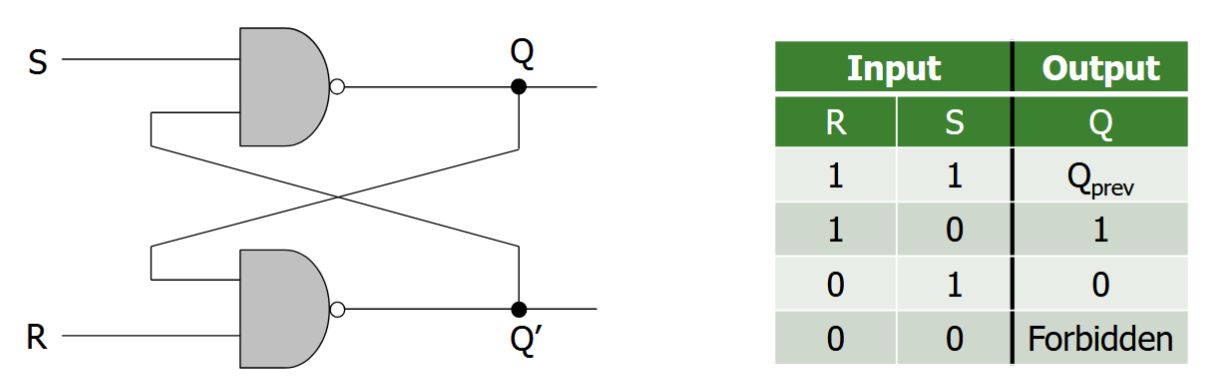
S and R should not both be 0 at the same time.
After
Front
R-S Latch
- Data is stored at Q (inverse at Q')
- S and R are control inputs
- In quiescent (idle) state, both S and R are held at 1
- S (set): drive S to 0 (keeping R at 1) to change Q to 1
- R (reset): drive R to 0 (keeping S at 1) to change Q to 0
Back
R-S Latch
- Data is stored at Q (inverse at Q')
- S and R are control inputs
- In quiescent (idle) state, both S and R are held at 1
- S (set): drive S to 0 (keeping R at 1) to change Q to 1
- R (reset): drive R to 0 (keeping S at 1) to change Q to 0
S and R should not both be 0 at the same time.
Field-by-field Comparison
| Field | Before | After |
|---|---|---|
| Text | R-S Latch<br><ul><li>Data is stored at {{c1::Q (inverse at Q')}}</li><li>S and R are {{c2::control inputs}}</li><ul> <li>In quiescent(idle) state, {{c3::both S and R are held at 1}}</li><li>S (set): {{c4::drive S to 0 (keeping R at 1) to change Q to 1}}</li><li>R (reset): {{c4::drive R to 0 (keeping S at 1) to change Q to 0}}</li></ul></ul> | R-S Latch<br><ul><li>Data is stored at {{c1::Q (inverse at Q')}}</li><li>S and R are {{c2::control inputs}}</li><ul> <li>In quiescent (idle) state, {{c3::both S and R are held at 1}}</li><li>S (set): {{c4::drive S to 0 (keeping R at 1) to change Q to 1}}</li><li>R (reset): {{c4::drive R to 0 (keeping S at 1) to change Q to 0}}</li></ul></ul> |