Note 1: ETH::2. Semester::A&W
Deck: ETH::2. Semester::A&W
Note Type: Horvath Cloze
GUID: g4xc]|oh.@
modified
Before
Front
ETH::2._Semester::A&W::1._Graphentheorie::4._Zusammenhang
Sei \(G = (V, E)\) ein Graph und \(u, v \in V, u \neq v\). Dann gilt:
- Jeder \(u\)-\(v\)-Knotenseparator hat Grösse mindestens \(k \)\(\iff\)Es gibt mindestens \(k\) intern-knotendisjunkte \(u\)-\(v\)-Pfade.
- Jeder \(u\)-\(v\)-Kantenseparator hat Grösse mindestens \(k\)\(\iff\)Es gibt mindestens \(k\) kantendisjunkte \(u\)-\(v\)-Pfade.
Back
ETH::2._Semester::A&W::1._Graphentheorie::4._Zusammenhang
Sei \(G = (V, E)\) ein Graph und \(u, v \in V, u \neq v\). Dann gilt:
- Jeder \(u\)-\(v\)-Knotenseparator hat Grösse mindestens \(k \)\(\iff\)Es gibt mindestens \(k\) intern-knotendisjunkte \(u\)-\(v\)-Pfade.
- Jeder \(u\)-\(v\)-Kantenseparator hat Grösse mindestens \(k\)\(\iff\)Es gibt mindestens \(k\) kantendisjunkte \(u\)-\(v\)-Pfade.
Satz von Karl Menger
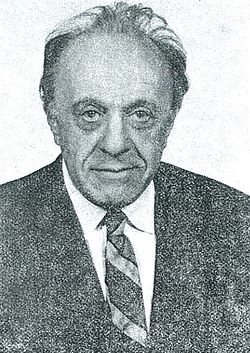
(Sohn vom sehr baseden Carl Menger)
After
Front
ETH::2._Semester::A&W::1._Graphentheorie::4._Zusammenhang
Sei \(G = (V, E)\) ein Graph und \(u, v \in V, u \neq v\). Dann gilt:
- Jeder \(u\)-\(v\)-Knotenseparator hat Grösse mindestens \(k \)\(\iff\)Es gibt mindestens \(k\) intern-knotendisjunkte \(u\)-\(v\)-Pfade.
- Jeder \(u\)-\(v\)-Kantenseparator hat Grösse mindestens \(k\)\(\iff\)Es gibt mindestens \(k\) kantendisjunkte \(u\)-\(v\)-Pfade.
Back
ETH::2._Semester::A&W::1._Graphentheorie::4._Zusammenhang
Sei \(G = (V, E)\) ein Graph und \(u, v \in V, u \neq v\). Dann gilt:
- Jeder \(u\)-\(v\)-Knotenseparator hat Grösse mindestens \(k \)\(\iff\)Es gibt mindestens \(k\) intern-knotendisjunkte \(u\)-\(v\)-Pfade.
- Jeder \(u\)-\(v\)-Kantenseparator hat Grösse mindestens \(k\)\(\iff\)Es gibt mindestens \(k\) kantendisjunkte \(u\)-\(v\)-Pfade.
Satz von Karl Menger
(Sohn vom sehr baseden Carl Menger)
Field-by-field Comparison
| Field |
Before |
After |
| Text |
Sei \(G = (V, E)\) ein Graph und \(u, v \in V, u \neq v\). Dann gilt:
<br><ol><li>{{c1::Jeder \(u\)-\(v\)-Knotenseparator hat Grösse mindestens \(k \)}}\(\iff\){{c2::Es gibt mindestens \(k\) intern-knotendisjunkte \(u\)-\(v\)-Pfade.}}</li><li>{{c1:: Jeder \(u\)-\(v\)-Kantenseparator hat Grösse mindestens \(k\)}}\(\iff\){{c2::Es gibt mindestens \(k\) kantendisjunkte \(u\)-\(v\)-Pfade.}}</li></ol> |
Sei \(G = (V, E)\) ein Graph und \(u, v \in V, u \neq v\). Dann gilt:
<br><ol><li>{{c1::Jeder \(u\)-\(v\)-Knotenseparator hat Grösse mindestens \(k \)}}\(\iff\){{c2::Es gibt mindestens \(k\) intern-knotendisjunkte \(u\)-\(v\)-Pfade.}}</li><li>{{c1::Jeder \(u\)-\(v\)-Kantenseparator hat Grösse mindestens \(k\)}}\(\iff\){{c2::Es gibt mindestens \(k\) kantendisjunkte \(u\)-\(v\)-Pfade.}}</li></ol> |
Tags:
ETH::2._Semester::A&W::1._Graphentheorie::4._Zusammenhang
Note 2: ETH::2. Semester::Analysis
Deck: ETH::2. Semester::Analysis
Note Type: Horvath Cloze
GUID: q:SB!^;sl@
modified
Before
Front
ETH::2._Semester::Analysis::1._Logik,_Mengen,_Zahlen::3._Zahlen
Ein abgeschlossenes Intervall zwischen \(a\) und \(b\) ist \([a, b]\)={{c3::\(\{ x \in \mathbb{R} \mid a \leq x \leq b\}\)}}.
Back
ETH::2._Semester::Analysis::1._Logik,_Mengen,_Zahlen::3._Zahlen
Ein abgeschlossenes Intervall zwischen \(a\) und \(b\) ist \([a, b]\)={{c3::\(\{ x \in \mathbb{R} \mid a \leq x \leq b\}\)}}.
After
Front
ETH::2._Semester::Analysis::1._Logik,_Mengen,_Zahlen::3._Zahlen
Ein abgeschlossenes Intervall zwischen \(a\) und \(b\) ist \([a, b]={{c3::\{ x \in \mathbb{R} \mid a \leq x \leq b\} }}\).
Back
ETH::2._Semester::Analysis::1._Logik,_Mengen,_Zahlen::3._Zahlen
Ein abgeschlossenes Intervall zwischen \(a\) und \(b\) ist \([a, b]={{c3::\{ x \in \mathbb{R} \mid a \leq x \leq b\} }}\).
Field-by-field Comparison
| Field |
Before |
After |
| Text |
Ein {{c1::abgeschlossenes}} Intervall zwischen \(a\) und \(b\) ist {{c2::\([a, b]\)}}={{c3::\(\{ x \in \mathbb{R} \mid a \leq x \leq b\}\)}}. |
Ein {{c1::abgeschlossenes}} Intervall zwischen \(a\) und \(b\) ist \({{c2::[a, b]}}={{c3::\{ x \in \mathbb{R} \mid a \leq x \leq b\} }}\). |
Tags:
ETH::2._Semester::Analysis::1._Logik,_Mengen,_Zahlen::3._Zahlen
Note 3: ETH::2. Semester::PProg
Deck: ETH::2. Semester::PProg
Note Type: Horvath Cloze
GUID: Gx8iRncQ~1
added
Previous
Note did not exist
New Note
Front
ETH::2._Semester::PProg::01._Introduction ETH::2._Semester::PProg::Terminology
Parallelism can be specified explicitly by manually assigning tasks to threads or implicitly by using a framework that distributes tasks automatically.
Back
ETH::2._Semester::PProg::01._Introduction ETH::2._Semester::PProg::Terminology
Parallelism can be specified explicitly by manually assigning tasks to threads or implicitly by using a framework that distributes tasks automatically.
Field-by-field Comparison
| Field |
Before |
After |
| Text |
|
Parallelism can be specified {{c1::explicitly by manually assigning tasks to threads}} or {{c2::implicitly by using a framework that distributes tasks automatically}}. |
Tags:
ETH::2._Semester::PProg::01._Introduction
ETH::2._Semester::PProg::Terminology
Note 4: ETH::2. Semester::PProg
Deck: ETH::2. Semester::PProg
Note Type: Horvath Cloze
GUID: bD]7})PU$-
modified
Before
Front
ETH::2._Semester::PProg::01._Introduction ETH::2._Semester::PProg::Terminology
Parallelism means doing multiple things at the same time (as opposed to concurrency: dealing with multiple things at the same time). Performing computations simultaneously; either actually, if sufficient computation units are available, or virtually, via some form of alternation. Often used interchangeably with concurrency. Parallelism can be specified explicitly by manually assigning tasks to threads or implicitly by using a framework that distributes tasks automatically.
Back
ETH::2._Semester::PProg::01._Introduction ETH::2._Semester::PProg::Terminology
Parallelism means doing multiple things at the same time (as opposed to concurrency: dealing with multiple things at the same time). Performing computations simultaneously; either actually, if sufficient computation units are available, or virtually, via some form of alternation. Often used interchangeably with concurrency. Parallelism can be specified explicitly by manually assigning tasks to threads or implicitly by using a framework that distributes tasks automatically.
After
Front
ETH::2._Semester::PProg::01._Introduction ETH::2._Semester::PProg::Terminology
Parallelism means doing multiple things at the same time.
Back
ETH::2._Semester::PProg::01._Introduction ETH::2._Semester::PProg::Terminology
Parallelism means doing multiple things at the same time.
(As opposed to concurrency: dealing with multiple things at the same time).
Performing computations simultaneously; either actually, if sufficient computation units are available, or virtually, via some form of alternation.
Often used interchangeably with concurrency.
Field-by-field Comparison
| Field |
Before |
After |
| Text |
{{c1::Parallelism}} means {{c2::doing multiple things at the same time}} (as opposed to concurrency: dealing with multiple things at the same time). Performing computations {{c3::simultaneously}}; either actually, if sufficient computation units are available, or virtually, via some form of alternation. Often used interchangeably with concurrency. {{c1::Parallelism}} can be specified explicitly by {{c4::manually assigning tasks to threads}} or implicitly by {{c5::using a framework that distributes tasks automatically}}. |
{{c1::Parallelism}} means {{c2::doing multiple things at the same time}}. |
| Extra |
|
(As opposed to concurrency: dealing with multiple things at the same time). <br><br>Performing computations simultaneously; either actually, if sufficient computation units are available, or virtually, via some form of alternation. <br><br>Often used interchangeably with concurrency. |
Tags:
ETH::2._Semester::PProg::01._Introduction
ETH::2._Semester::PProg::Terminology
Note 5: ETH::2. Semester::PProg
Deck: ETH::2. Semester::PProg
Note Type: Horvath Cloze
GUID: eIYu#!KzX_
modified
Before
Front
ETH::2._Semester::PProg::01._Introduction
\(\text{speedup (using p processors)} = \frac{\text{execution time (using 1 processor)}}{\text{execution time (using p processors)}}\)
Back
ETH::2._Semester::PProg::01._Introduction
\(\text{speedup (using p processors)} = \frac{\text{execution time (using 1 processor)}}{\text{execution time (using p processors)}}\)
After
Front
ETH::2._Semester::PProg::01._Introduction
\({{c1::\text{speedup (using p processors)} }} = \frac{ {{c2::\text{execution time (using 1 processor)} }} }{ {{c3::\text{execution time (using p processors)} }} }\)
Back
ETH::2._Semester::PProg::01._Introduction
\({{c1::\text{speedup (using p processors)} }} = \frac{ {{c2::\text{execution time (using 1 processor)} }} }{ {{c3::\text{execution time (using p processors)} }} }\)
Field-by-field Comparison
| Field |
Before |
After |
| Text |
\({{c1::\text{speedup (using p processors)}}} = \frac{{{c2::\text{execution time (using 1 processor)}}}}{{{c3::\text{execution time (using p processors)}}}}\) |
\({{c1::\text{speedup (using p processors)} }} = \frac{ {{c2::\text{execution time (using 1 processor)} }} }{ {{c3::\text{execution time (using p processors)} }} }\) |
Tags:
ETH::2._Semester::PProg::01._Introduction
Note 6: ETH::2. Semester::Advanced Finance
Deck: ETH::2. Semester::Advanced Finance
Note Type: Horvath Cloze
GUID: Co|jGBm>(z
deleted
Deleted Note
Front
ETH::2._Semester::Advanced_Finance::19::1._What_Agency_Problems_Should_You_Watch_Out_For?
An entrenching investment is an investment which favors the skills of the current managers even if the investment has a lower or negative NPV.
Back
ETH::2._Semester::Advanced_Finance::19::1._What_Agency_Problems_Should_You_Watch_Out_For?
An entrenching investment is an investment which favors the skills of the current managers even if the investment has a lower or negative NPV.
Current
Note has been deleted
Field-by-field Comparison
| Field |
Before |
After |
| Text |
An entrenching investment is an investment which {{c1:: favors the skills of the current managers}} even if the investment has a lower or negative NPV. |
|
Tags:
ETH::2._Semester::Advanced_Finance::19::1._What_Agency_Problems_Should_You_Watch_Out_For?
Note 7: ETH::2. Semester::Advanced Finance
Deck: ETH::2. Semester::Advanced Finance
Note Type: Horvath Cloze
GUID: EKv&?P)`(`
deleted
Deleted Note
Front
ETH::2._Semester::Advanced_Finance::19::1._What_Agency_Problems_Should_You_Watch_Out_For?
Agency costs are reductions in a firm's value that arise from agency problems
Back
ETH::2._Semester::Advanced_Finance::19::1._What_Agency_Problems_Should_You_Watch_Out_For?
Agency costs are reductions in a firm's value that arise from agency problems
Current
Note has been deleted
Field-by-field Comparison
| Field |
Before |
After |
| Text |
Agency costs are {{c1::reductions in a firm's value that arise from agency problems}} |
|
Tags:
ETH::2._Semester::Advanced_Finance::19::1._What_Agency_Problems_Should_You_Watch_Out_For?
Note 8: ETH::2. Semester::Advanced Finance
Deck: ETH::2. Semester::Advanced Finance
Note Type: Horvath Cloze
GUID: KI_dDLj#+L
deleted
Deleted Note
Front
ETH::2._Semester::Advanced_Finance::19::1._What_Agency_Problems_Should_You_Watch_Out_For?
Agency problems are problems that arise from conflicting interests of agents (managers) and principals (shareholders).
Back
ETH::2._Semester::Advanced_Finance::19::1._What_Agency_Problems_Should_You_Watch_Out_For?
Agency problems are problems that arise from conflicting interests of agents (managers) and principals (shareholders).
The agent might act in this way for various reasons such as his personal compensation or prestige for example.
Current
Note has been deleted
Field-by-field Comparison
| Field |
Before |
After |
| Text |
Agency problems are problems that arise from {{c1::conflicting interests of agents (managers) and principals (shareholders)}}. |
|
| Extra |
The agent might act in this way for various reasons such as his personal compensation or prestige for example. |
|
Tags:
ETH::2._Semester::Advanced_Finance::19::1._What_Agency_Problems_Should_You_Watch_Out_For?
Note 9: ETH::2. Semester::Advanced Finance
Deck: ETH::2. Semester::Advanced Finance
Note Type: Horvath Cloze
GUID: N)B$=S1q&p
deleted
Deleted Note
Front
ETH::2._Semester::Advanced_Finance::19::1._What_Agency_Problems_Should_You_Watch_Out_For?
Agency costs fall into two categories:
- Value lost because managers don't take value-maximizing decisions
- Costs of monitoring managers, setting rules and procedures to mitigate agency problems, and intervening when agency problems are sufficiently severe
Back
ETH::2._Semester::Advanced_Finance::19::1._What_Agency_Problems_Should_You_Watch_Out_For?
Agency costs fall into two categories:
- Value lost because managers don't take value-maximizing decisions
- Costs of monitoring managers, setting rules and procedures to mitigate agency problems, and intervening when agency problems are sufficiently severe
Current
Note has been deleted
Field-by-field Comparison
| Field |
Before |
After |
| Text |
Agency costs fall into two categories: <br><ol><li>{{c1:: Value lost because managers don't take value-maximizing decisions}}</li><li>{{c2:: Costs of monitoring managers, setting rules and procedures to mitigate agency problems, and intervening when agency problems are sufficiently severe}}</li></ol> |
|
Tags:
ETH::2._Semester::Advanced_Finance::19::1._What_Agency_Problems_Should_You_Watch_Out_For?
Note 10: ETH::2. Semester::Advanced Finance
Deck: ETH::2. Semester::Advanced Finance
Note Type: Horvath Cloze
GUID: OKj^jidPIi
deleted
Deleted Note
Front
ETH::2._Semester::Advanced_Finance::19::1._What_Agency_Problems_Should_You_Watch_Out_For?
Errors of commission are mistakes which can be characterized as making a bad decision.
Back
ETH::2._Semester::Advanced_Finance::19::1._What_Agency_Problems_Should_You_Watch_Out_For?
Errors of commission are mistakes which can be characterized as making a bad decision.
Current
Note has been deleted
Field-by-field Comparison
| Field |
Before |
After |
| Text |
Errors of {{c1:: commission}} are mistakes which can be characterized as making a bad decision. |
|
Tags:
ETH::2._Semester::Advanced_Finance::19::1._What_Agency_Problems_Should_You_Watch_Out_For?
Note 11: ETH::2. Semester::Advanced Finance
Deck: ETH::2. Semester::Advanced Finance
Note Type: Horvath Cloze
GUID: e|~]-hge*L
deleted
Deleted Note
Front
ETH::2._Semester::Advanced_Finance::19::1._What_Agency_Problems_Should_You_Watch_Out_For?
Agency problems include a manager:
- not putting in sufficient effort
- wasting money on personal benefits
- overinvesting in search of power or prestige
- taking too many or too few risks
- focusing on short-term results at the expense of long-term results
Back
ETH::2._Semester::Advanced_Finance::19::1._What_Agency_Problems_Should_You_Watch_Out_For?
Agency problems include a manager:
- not putting in sufficient effort
- wasting money on personal benefits
- overinvesting in search of power or prestige
- taking too many or too few risks
- focusing on short-term results at the expense of long-term results
Current
Note has been deleted
Field-by-field Comparison
| Field |
Before |
After |
| Text |
Agency problems include a manager:<br><ol><li>{{c1:: not putting in sufficient effort}}</li><li>{{c2:: wasting money on personal benefits}}</li><li>{{c3:: overinvesting in search of power or prestige}}</li><li>{{c4:: taking too many or too few risks}}</li><li>{{c5:: focusing on short-term results at the expense of long-term results}}</li></ol> |
|
Tags:
ETH::2._Semester::Advanced_Finance::19::1._What_Agency_Problems_Should_You_Watch_Out_For?
Note 12: ETH::2. Semester::Advanced Finance
Deck: ETH::2. Semester::Advanced Finance
Note Type: Horvath Cloze
GUID: jCa{z0lPT/
deleted
Deleted Note
Front
ETH::2._Semester::Advanced_Finance::19::1._What_Agency_Problems_Should_You_Watch_Out_For?
Managers should ignore specific risk while evaluating investments as shareholders can diversify this risk away.
Back
ETH::2._Semester::Advanced_Finance::19::1._What_Agency_Problems_Should_You_Watch_Out_For?
Managers should ignore specific risk while evaluating investments as shareholders can diversify this risk away.
Current
Note has been deleted
Field-by-field Comparison
| Field |
Before |
After |
| Text |
Managers should ignore {{c1:: specific risk}} while evaluating investments as shareholders can {{c2::diversify this risk away}}. |
|
Tags:
ETH::2._Semester::Advanced_Finance::19::1._What_Agency_Problems_Should_You_Watch_Out_For?
Note 13: ETH::2. Semester::Advanced Finance
Deck: ETH::2. Semester::Advanced Finance
Note Type: Horvath Cloze
GUID: jUK}sO~Ses
deleted
Deleted Note
Front
ETH::2._Semester::Advanced_Finance::19::1._What_Agency_Problems_Should_You_Watch_Out_For?
NPV stands for Net Present Value and is a method of evaluating the profitability of an investment by calculating the present value of future expected cashflows minus the initial cost of the investment.
Back
ETH::2._Semester::Advanced_Finance::19::1._What_Agency_Problems_Should_You_Watch_Out_For?
NPV stands for Net Present Value and is a method of evaluating the profitability of an investment by calculating the present value of future expected cashflows minus the initial cost of the investment.
Current
Note has been deleted
Field-by-field Comparison
| Field |
Before |
After |
| Text |
NPV stands for {{c1:: Net Present Value}} and is a {{c2:: method of evaluating the profitability of an investment}} by {{c3:: calculating the present value of future expected cashflows minus the initial cost of the investment}}. |
|
Tags:
ETH::2._Semester::Advanced_Finance::19::1._What_Agency_Problems_Should_You_Watch_Out_For?
Note 14: ETH::2. Semester::Advanced Finance
Deck: ETH::2. Semester::Advanced Finance
Note Type: Horvath Cloze
GUID: kr$X2j=OQ2
deleted
Deleted Note
Front
ETH::2._Semester::Advanced_Finance::19::1._What_Agency_Problems_Should_You_Watch_Out_For?
Managers are typically averse to specific risk because their own livelyhood is closely tied to the firm's performance
Back
ETH::2._Semester::Advanced_Finance::19::1._What_Agency_Problems_Should_You_Watch_Out_For?
Managers are typically averse to specific risk because their own livelyhood is closely tied to the firm's performance
Current
Note has been deleted
Field-by-field Comparison
| Field |
Before |
After |
| Text |
Managers are typically averse to specific risk because {{c1:: their own livelyhood is closely tied to the firm's performance}} |
|
Tags:
ETH::2._Semester::Advanced_Finance::19::1._What_Agency_Problems_Should_You_Watch_Out_For?
Note 15: ETH::2. Semester::Advanced Finance
Deck: ETH::2. Semester::Advanced Finance
Note Type: Horvath Cloze
GUID: rRZQ}T1r<0
deleted
Deleted Note
Front
ETH::2._Semester::Advanced_Finance::19::1._What_Agency_Problems_Should_You_Watch_Out_For?
Errors of ommission are mistakes which can be characterized as failing to take good decisions.
Back
ETH::2._Semester::Advanced_Finance::19::1._What_Agency_Problems_Should_You_Watch_Out_For?
Errors of ommission are mistakes which can be characterized as failing to take good decisions.
Current
Note has been deleted
Field-by-field Comparison
| Field |
Before |
After |
| Text |
Errors of {{c1:: ommission}} are mistakes which can be characterized as failing to take good decisions. |
|
Tags:
ETH::2._Semester::Advanced_Finance::19::1._What_Agency_Problems_Should_You_Watch_Out_For?
Note 16: ETH::Science in Perspective::Advanced Finance
Deck: ETH::Science in Perspective::Advanced Finance
Note Type: Horvath Cloze
GUID: Co|jGBm>(z
added
Previous
Note did not exist
New Note
Front
ETH::Science_in_Perspective::Advanced_Finance::19::1._What_Agency_Problems_Should_You_Watch_Out_For?
An entrenching investment is an investment which favors the skills of the current managers even if the investment has a lower or negative NPV.
Back
ETH::Science_in_Perspective::Advanced_Finance::19::1._What_Agency_Problems_Should_You_Watch_Out_For?
An entrenching investment is an investment which favors the skills of the current managers even if the investment has a lower or negative NPV.
Field-by-field Comparison
| Field |
Before |
After |
| Text |
|
An entrenching investment is an investment which {{c1:: favors the skills of the current managers}} even if the investment has a lower or negative NPV. |
Tags:
ETH::Science_in_Perspective::Advanced_Finance::19::1._What_Agency_Problems_Should_You_Watch_Out_For?
Note 17: ETH::Science in Perspective::Advanced Finance
Deck: ETH::Science in Perspective::Advanced Finance
Note Type: Horvath Cloze
GUID: EKv&?P)`(`
added
Previous
Note did not exist
New Note
Front
ETH::Science_in_Perspective::Advanced_Finance::19::1._What_Agency_Problems_Should_You_Watch_Out_For?
Agency costs are reductions in a firm's value that arise from agency problems
Back
ETH::Science_in_Perspective::Advanced_Finance::19::1._What_Agency_Problems_Should_You_Watch_Out_For?
Agency costs are reductions in a firm's value that arise from agency problems
Field-by-field Comparison
| Field |
Before |
After |
| Text |
|
Agency costs are {{c1::reductions in a firm's value that arise from agency problems}} |
Tags:
ETH::Science_in_Perspective::Advanced_Finance::19::1._What_Agency_Problems_Should_You_Watch_Out_For?
Note 18: ETH::Science in Perspective::Advanced Finance
Deck: ETH::Science in Perspective::Advanced Finance
Note Type: Horvath Cloze
GUID: KI_dDLj#+L
added
Previous
Note did not exist
New Note
Front
ETH::Science_in_Perspective::Advanced_Finance::19::1._What_Agency_Problems_Should_You_Watch_Out_For?
Agency problems are problems that arise from conflicting interests of agents (managers) and principals (shareholders).
Back
ETH::Science_in_Perspective::Advanced_Finance::19::1._What_Agency_Problems_Should_You_Watch_Out_For?
Agency problems are problems that arise from conflicting interests of agents (managers) and principals (shareholders).
The agent might act in this way for various reasons such as his personal compensation or prestige for example.
Field-by-field Comparison
| Field |
Before |
After |
| Text |
|
Agency problems are problems that arise from {{c1::conflicting interests of agents (managers) and principals (shareholders)}}. |
| Extra |
|
The agent might act in this way for various reasons such as his personal compensation or prestige for example. |
Tags:
ETH::Science_in_Perspective::Advanced_Finance::19::1._What_Agency_Problems_Should_You_Watch_Out_For?
Note 19: ETH::Science in Perspective::Advanced Finance
Deck: ETH::Science in Perspective::Advanced Finance
Note Type: Horvath Cloze
GUID: N)B$=S1q&p
added
Previous
Note did not exist
New Note
Front
ETH::Science_in_Perspective::Advanced_Finance::19::1._What_Agency_Problems_Should_You_Watch_Out_For?
Agency costs fall into two categories:
- Value lost because managers don't take value-maximizing decisions
- Costs of monitoring managers, setting rules and procedures to mitigate agency problems, and intervening when agency problems are sufficiently severe
Back
ETH::Science_in_Perspective::Advanced_Finance::19::1._What_Agency_Problems_Should_You_Watch_Out_For?
Agency costs fall into two categories:
- Value lost because managers don't take value-maximizing decisions
- Costs of monitoring managers, setting rules and procedures to mitigate agency problems, and intervening when agency problems are sufficiently severe
Field-by-field Comparison
| Field |
Before |
After |
| Text |
|
Agency costs fall into two categories: <br><ol><li>{{c1:: Value lost because managers don't take value-maximizing decisions}}</li><li>{{c2:: Costs of monitoring managers, setting rules and procedures to mitigate agency problems, and intervening when agency problems are sufficiently severe}}</li></ol> |
Tags:
ETH::Science_in_Perspective::Advanced_Finance::19::1._What_Agency_Problems_Should_You_Watch_Out_For?
Note 20: ETH::Science in Perspective::Advanced Finance
Deck: ETH::Science in Perspective::Advanced Finance
Note Type: Horvath Cloze
GUID: OKj^jidPIi
added
Previous
Note did not exist
New Note
Front
ETH::Science_in_Perspective::Advanced_Finance::19::1._What_Agency_Problems_Should_You_Watch_Out_For?
Errors of commission are mistakes which can be characterized as making a bad decision.
Back
ETH::Science_in_Perspective::Advanced_Finance::19::1._What_Agency_Problems_Should_You_Watch_Out_For?
Errors of commission are mistakes which can be characterized as making a bad decision.
Field-by-field Comparison
| Field |
Before |
After |
| Text |
|
Errors of {{c1:: commission}} are mistakes which can be characterized as making a bad decision. |
Tags:
ETH::Science_in_Perspective::Advanced_Finance::19::1._What_Agency_Problems_Should_You_Watch_Out_For?
Note 21: ETH::Science in Perspective::Advanced Finance
Deck: ETH::Science in Perspective::Advanced Finance
Note Type: Horvath Cloze
GUID: e|~]-hge*L
added
Previous
Note did not exist
New Note
Front
ETH::Science_in_Perspective::Advanced_Finance::19::1._What_Agency_Problems_Should_You_Watch_Out_For?
Agency problems include a manager:
- not putting in sufficient effort
- wasting money on personal benefits
- overinvesting in search of power or prestige
- taking too many or too few risks
- focusing on short-term results at the expense of long-term results
Back
ETH::Science_in_Perspective::Advanced_Finance::19::1._What_Agency_Problems_Should_You_Watch_Out_For?
Agency problems include a manager:
- not putting in sufficient effort
- wasting money on personal benefits
- overinvesting in search of power or prestige
- taking too many or too few risks
- focusing on short-term results at the expense of long-term results
Field-by-field Comparison
| Field |
Before |
After |
| Text |
|
Agency problems include a manager:<br><ol><li>{{c1:: not putting in sufficient effort}}</li><li>{{c2:: wasting money on personal benefits}}</li><li>{{c3:: overinvesting in search of power or prestige}}</li><li>{{c4:: taking too many or too few risks}}</li><li>{{c5:: focusing on short-term results at the expense of long-term results}}</li></ol> |
Tags:
ETH::Science_in_Perspective::Advanced_Finance::19::1._What_Agency_Problems_Should_You_Watch_Out_For?
Note 22: ETH::Science in Perspective::Advanced Finance
Deck: ETH::Science in Perspective::Advanced Finance
Note Type: Horvath Cloze
GUID: jCa{z0lPT/
added
Previous
Note did not exist
New Note
Front
ETH::Science_in_Perspective::Advanced_Finance::19::1._What_Agency_Problems_Should_You_Watch_Out_For?
Managers should ignore specific risk while evaluating investments as shareholders can diversify this risk away.
Back
ETH::Science_in_Perspective::Advanced_Finance::19::1._What_Agency_Problems_Should_You_Watch_Out_For?
Managers should ignore specific risk while evaluating investments as shareholders can diversify this risk away.
Field-by-field Comparison
| Field |
Before |
After |
| Text |
|
Managers should ignore {{c1:: specific risk}} while evaluating investments as shareholders can {{c2::diversify this risk away}}. |
Tags:
ETH::Science_in_Perspective::Advanced_Finance::19::1._What_Agency_Problems_Should_You_Watch_Out_For?
Note 23: ETH::Science in Perspective::Advanced Finance
Deck: ETH::Science in Perspective::Advanced Finance
Note Type: Horvath Cloze
GUID: jUK}sO~Ses
added
Previous
Note did not exist
New Note
Front
ETH::Science_in_Perspective::Advanced_Finance::19::1._What_Agency_Problems_Should_You_Watch_Out_For?
NPV stands for Net Present Value and is a method of evaluating the profitability of an investment by calculating the present value of future expected cashflows minus the initial cost of the investment.
Back
ETH::Science_in_Perspective::Advanced_Finance::19::1._What_Agency_Problems_Should_You_Watch_Out_For?
NPV stands for Net Present Value and is a method of evaluating the profitability of an investment by calculating the present value of future expected cashflows minus the initial cost of the investment.
Field-by-field Comparison
| Field |
Before |
After |
| Text |
|
NPV stands for {{c1:: Net Present Value}} and is a {{c2:: method of evaluating the profitability of an investment}} by {{c3:: calculating the present value of future expected cashflows minus the initial cost of the investment}}. |
Tags:
ETH::Science_in_Perspective::Advanced_Finance::19::1._What_Agency_Problems_Should_You_Watch_Out_For?
Note 24: ETH::Science in Perspective::Advanced Finance
Deck: ETH::Science in Perspective::Advanced Finance
Note Type: Horvath Cloze
GUID: kr$X2j=OQ2
added
Previous
Note did not exist
New Note
Front
ETH::Science_in_Perspective::Advanced_Finance::19::1._What_Agency_Problems_Should_You_Watch_Out_For?
Managers are typically averse to specific risk because their own livelyhood is closely tied to the firm's performance
Back
ETH::Science_in_Perspective::Advanced_Finance::19::1._What_Agency_Problems_Should_You_Watch_Out_For?
Managers are typically averse to specific risk because their own livelyhood is closely tied to the firm's performance
Field-by-field Comparison
| Field |
Before |
After |
| Text |
|
Managers are typically averse to specific risk because {{c1:: their own livelyhood is closely tied to the firm's performance}} |
Tags:
ETH::Science_in_Perspective::Advanced_Finance::19::1._What_Agency_Problems_Should_You_Watch_Out_For?
Note 25: ETH::Science in Perspective::Advanced Finance
Deck: ETH::Science in Perspective::Advanced Finance
Note Type: Horvath Cloze
GUID: rRZQ}T1r<0
added
Previous
Note did not exist
New Note
Front
ETH::Science_in_Perspective::Advanced_Finance::19::1._What_Agency_Problems_Should_You_Watch_Out_For?
Errors of ommission are mistakes which can be characterized as failing to take good decisions.
Back
ETH::Science_in_Perspective::Advanced_Finance::19::1._What_Agency_Problems_Should_You_Watch_Out_For?
Errors of ommission are mistakes which can be characterized as failing to take good decisions.
Field-by-field Comparison
| Field |
Before |
After |
| Text |
|
Errors of {{c1:: ommission}} are mistakes which can be characterized as failing to take good decisions. |
Tags:
ETH::Science_in_Perspective::Advanced_Finance::19::1._What_Agency_Problems_Should_You_Watch_Out_For?